

Both psilocybin and ketamine show powerful potential for treating depression, anxiety, and PTSD. While ketamine offers rapid relief, psilocybin can foster deeper, longer-lasting transformation. Together, we want to explore the differences between the two and educate our audience.
For those facing relentless depression, anxiety, or trauma that talk therapy and pharmaceuticals haven’t touched, medicines like psilocybin and ketamine represent hope. But many are asking:
Are they the same?
Is one more effective?
And what are the risks?
While both compounds are making headlines as breakthrough treatments, they work in profoundly different ways—biologically, emotionally, and spiritually.
What Are Psilocybin and Ketamine? (And Are They Even Similar?)
We’ve worked with psilocybin for over a decade. Know that psilocybin and ketamine may both be used for healing, but they’re completely different tools. Their effects, origins, and emotional impact couldn’t be more distinct.
Psilocybin: The Natural Serotonergic Classic
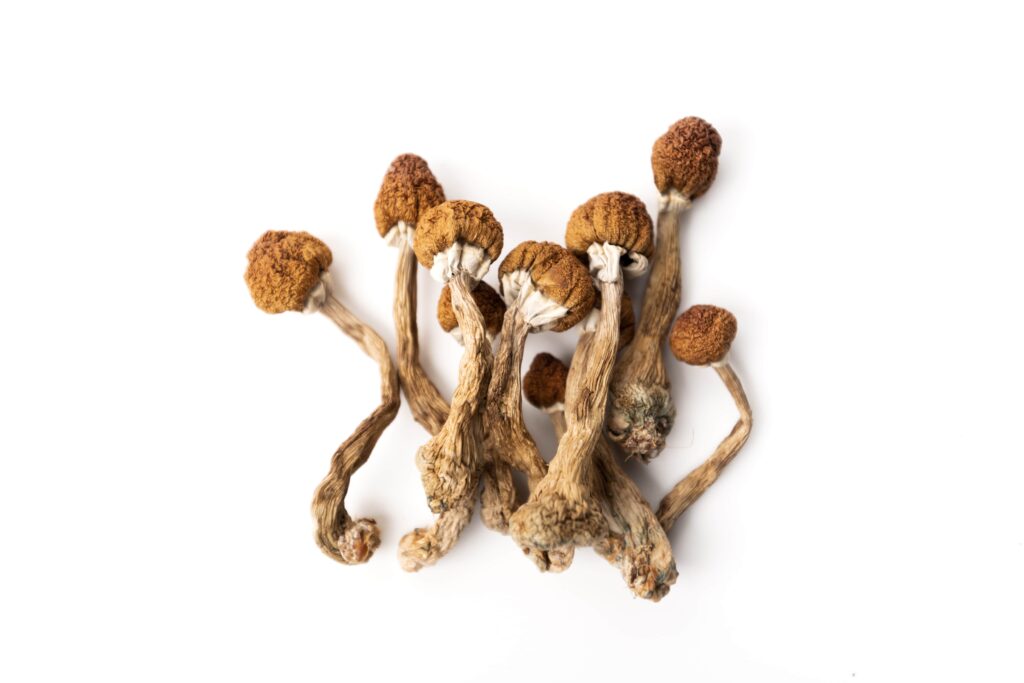
Psilocybin comes from sacred mushrooms that have been used ceremonially for generations. Today, modern science is confirming what ancestral wisdom has always known: this medicine can open powerful doors to healing.
- Psilocybin activates the brain’s serotonin receptors (specifically 5-HT2A), helping shift mood, perception, and emotional resilience.
- It’s known for producing introspective, mystical, and emotionally cathartic journeys, often described as reconnecting with your soul.
- It disrupts the brain’s default mode network (DMN)—the hub of overthinking and ego chatter—allowing for expansive new perspectives.
- When held in a safe, intentional setting, psilocybin often leads to breakthroughs, clarity, and lasting emotional shifts.
Ketamine: The Fast-Acting Dissociative
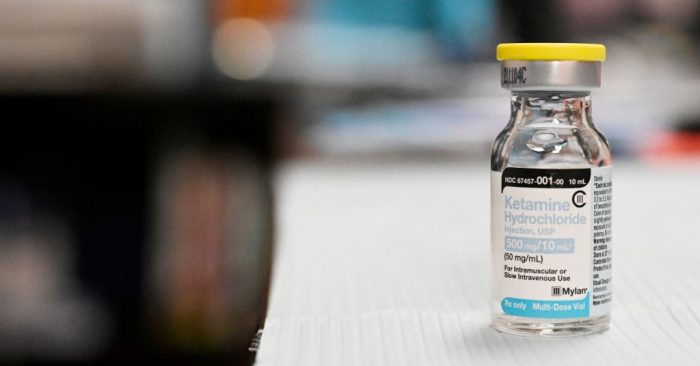
Photo Source -> UNSW
Ketamine is not a psychedelic—at least not in the traditional sense. It’s a dissociative anesthetic that’s been used in medical settings for decades. But in recent years, it’s gained attention for its ability to rapidly reduce depression and suicidal thoughts.
- Ketamine works on the glutamate system, blocking NMDA receptors and enhancing synaptic plasticity.
- It induces a detached, dreamlike state, where individuals may feel separated from their bodies, thoughts, or surroundings.
- This temporary dissociation can provide relief from intense emotional pain, especially for those in acute crisis.
- While it doesn’t always facilitate deep emotional insight, it often brings quick stabilization, buying time for deeper healing work.
Chemical Differences at a Glance
Though they’re sometimes lumped together in the world of alternative mental health, psilocybin and ketamine operate in completely different ways.
- Psilocybin is a tryptamine, structurally related to serotonin and deeply emotional in nature.
- Ketamine is an arylcyclohexylamine, acting on NMDA receptors to reduce pain and overactivity in certain brain regions.
- One draws you into your emotions with clarity; the other offers temporary relief through separation.
- They are not interchangeable tools, but rather distinct medicines, each offering something different depending on the needs of the individual.
As with all true healing, medicine is only part of the equation. What matters just as much—if not more—is how you use it, who holds space for you, and what support surrounds the experience.
Which One Works Better for Depression and Anxiety?
When it comes to depression and anxiety, there’s no one-size-fits-all. Both psilocybin and ketamine have their place in the healing landscape—but they work in very different ways. As a facilitator who’s witnessed hundreds of breakthroughs, We’ve seen how important it is to choose the right tool for where someone is on their journey.
The Case for Psilocybin
Psilocybin is medicine that doesn’t just treat the symptoms—it invites you to explore the root.
- Many guests report profound shifts after just one or two sessions. The effects can last weeks or even months.
- It helps you access deep emotional material, release it, and reframe how you relate to your story.
- Psilocybin encourages behavioral change, spiritual insight, and a renewed sense of purpose—not just symptom relief.
- It often leaves people with an enhanced sense of mindfulness, peace, and emotional resilience.
This is why we emphasize not just the medicine, but the preparation, intention, and integration that support the transformation.
The Case for Ketamine
Ketamine can be a lifeline when someone is in crisis. For those experiencing overwhelming depression or suicidal thoughts, it offers something psilocybin doesn’t: Speed.
- Ketamine works within minutes, to reduce depressive symptoms and suicidality.
- It’s also shown promise for PTSD and chronic pain, offering temporary relief from intense emotional and physical suffering.
- Ketamine is available in clinical settings—administered via IV, intramuscular injection, or nasal spray (like FDA-approved Spravato).
For many, the emotional distance ketamine creates feels more like a pause than a transformation. It’s useful—and in some cases, absolutely essential—but it’s often a first step, not a final one.
What the Science Says
Researchers are exploring both of these medicines with increasing enthusiasm—and the data is compelling.
- Both ketamine and psilocybin show significant reductions in depression and anxiety, especially in treatment-resistant cases.
But studies suggest that psilocybin’s effects are longer lasting, often holding for weeks or months after just one or two doses. - Ketamine typically requires repeated treatments—sometimes weekly—to maintain relief.
At the end of the day, it’s not just about what works better on paper. It’s about what you need, what you’re ready for, and how supported you are in the process. Healing isn’t linear—and neither is this decision.
Real-World Experiences: What People Say About Each

The science is important—but so is lived experience. After guiding over a thousand guests through psilocybin journeys and hearing stories from those who’ve explored ketamine treatments, we’ve learned this: how a medicine feels can be just as important as how it works.
Here’s Our Findings From Guests
Psilocybin tends to open the heart. It brings people into their experience, often in the most transformative way.
- Many describe their journey as mystical, emotional, and life-changing.
- It often feels like a reunion with the self—a remembering of who they are beyond trauma, diagnosis, or labels.
- Guests tell us, “I feel like I came back home to myself.”
- The breakthroughs often come through emotional release—crying, trembling, or revisiting painful memories with newfound perspective.
- When paired with integration coaching and a safe retreat environment, those moments become catalysts for lasting change.
Ketamine Users Say…
Ketamine is often described as helpful—but distant. It’s not emotional in the same way psilocybin is. That’s not a flaw—it’s part of its purpose.
- People say things like, “It helped me survive, but it didn’t help me heal.”
- The experience can feel emotionally flat or disconnected, almost like watching your life through a window.
- Some users report fogginess or depersonalization after sessions. Others mention needing frequent doses to maintain relief.
- That said, many appreciate the break from emotional pain, especially in moments of crisis. For some, ketamine is the first breath after years underwater.
Long-Term Benefits: Which One Creates Lasting Change?
This is the question that matters most to many of our guests: Will this actually change my life? Not just for a few hours, not just while I’m in the experience—but weeks, months, even years from now.
From what we’ve seen, both medicines can offer healing. But the depth and duration of that healing often differ.
Psilocybin
Psilocybin is medicine for those ready to do deep work. It doesn’t just numb the pain—it reveals it, reframes it, and invites you to transform it.
- People often come away with profound spiritual insights—a sense that they’ve touched something bigger than themselves.
- It encourages you to re-evaluate your life, your relationships, your beliefs, and how you show up in the world.
- The emotional catharsis can be intense, but it’s also where true healing begins.
- One well-held session can ripple through every part of your life. We’ve seen people change careers, mend relationships, and reconnect with joy after just one journey.
Ketamine
Ketamine has a different rhythm. It meets people where they are, especially in acute crisis. And sometimes, that’s exactly what’s needed.
- It offers fast stabilization, especially for those experiencing suicidal thoughts or severe depression.
- But the effects often fade within days or weeks, requiring repeated infusions to maintain relief.
- For most, ketamine is supportive but not transformative. It can lift the weight enough for someone to take the next step—but that step often needs to come from somewhere deeper.
We always hear the best “quotes” directly after someone experiences a profound change thanks to psilocybin.
🔍 “Psilocybin helped me change my life. Ketamine helped me survive.”
And I think that sums it up perfectly. Both have their place. The key is knowing what kind of healing you’re seeking—and being honest about where you are on your journey.
Safety, Addiction, and Side Effects
Safety is non-negotiable. Whether you’re exploring psilocybin or ketamine, it’s essential to understand the risks, not just the rewards. These are both powerful drugs—they deserve respect and the right environment.
Is Psilocybin Addictive?
No. Psilocybin is not physically addictive, and abuse is extremely rare.
- Its effects are emotionally intense, not escapist. You don’t take psilocybin to avoid feelings—you take it to meet them.
- Because of this, it’s very unlikely to become habit-forming. In fact, many people need only one or two journeys to experience a major shift.
When used in a ceremonial, guided setting, psilocybin is not only safe—it’s sacred. We create space for the medicine to be held with integrity, care, and integration.
Is Ketamine Addictive?
Here’s where the conversation gets more nuanced.
- Ketamine, especially at frequent or high doses, can lead to psychological dependence.
- Some users begin chasing the dissociative feeling or rely on the relief it offers without addressing the root.
- There are also long-term health risks—notably bladder inflammation and cognitive fog in chronic use.
This doesn’t mean ketamine isn’t valuable. But it does mean that frequency, intention, and supervision matter deeply. If you’re considering ketamine therapy, ask questions, work with experienced clinicians, and have a plan for aftercare.
Legal Access and Availability
One of the most common questions we hear from people ready to begin this healing work is: “Is this even legal?” And it’s a fair question. The legal landscape around psilocybin and ketamine is shifting fast—but it’s still confusing, inconsistent, and often frustrating.
Here’s what you need to know if you’re exploring either medicine.
Where Can You Legally Use Psilocybin?
Psilocybin is making its way into the mainstream, but it’s not quite there yet—at least in the eyes of the law.
- It’s legal in Oregon for supervised therapeutic use, and decriminalized in select U.S. cities like Denver, Oakland, and Santa Cruz.
- Outside the U.S., retreat centers in places like Mexico, Jamaica, and the Netherlands offer safe, legal psilocybin experiences in ceremonial settings.
- At The Buena Vida, we hold our psilocybin retreats in Mexico, where psilocybin can be used respectfully and legally in a sacred, therapeutic context.
- While not yet FDA-approved, psilocybin is in Phase 3 clinical trials—and the early results are incredibly promising.
Where Can You Access Ketamine?
Ketamine has been legal for decades in medical settings as an anesthetic, and its use for mental health is now widely accepted.
- In the U.S., ketamine is legal with a prescription, and there are hundreds of clinics offering treatment for depression, anxiety, and PTSD.
The FDA has approved a form of ketamine called Spravato (esketamine) for treatment-resistant depression. - However, Spravato is the only version typically covered by insurance, and even then, access can depend on diagnosis, provider, and state regulations.
- Most standard ketamine treatments—IV infusions or lozenges—are still paid out of pocket and can cost hundreds to thousands of dollars over time.
In terms of accessibility, ketamine is currently easier to obtain in the U.S.—but that doesn’t necessarily make it the right fit for everyone.
Choosing What’s Right for You
This is where the path gets personal. There’s no “better” medicine—only what’s right for you, right now. We’ve guided people at every stage of their healing journey—some looking for deep transformation, others just trying to make it to next week. Both are valid. Both deserve support.
Before choosing a direction, we always encourage guests to pause and ask a few honest questions.
Ask Yourself…
- Do you need fast stabilization or long-term transformation?
If you’re in an acute crisis, ketamine may help stabilize the nervous system quickly. If you’re ready for deeper inner work, psilocybin may open that door. - Are you emotionally ready for deep introspection?
Psilocybin tends to stir the soul. It can be raw, beautiful, and intense. Ketamine, on the other hand, creates distance—helpful for some, but not always insightful. - Are you able to access integration support post-experience?
Neither medicine is a magic fix. What happens after matters most. Do you have a therapist, coach, or retreat community to support your process?
Healing Can’t Always Be Categorized
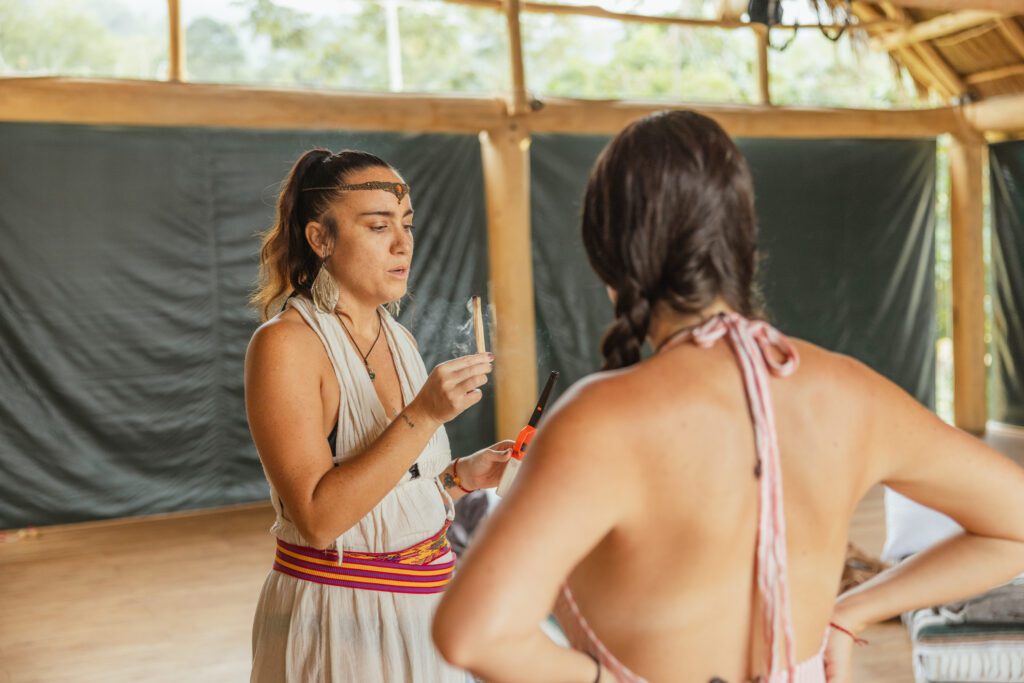
If there’s one thing we’ve learned in this work, it’s that healing doesn’t fit neatly into categories. It’s not about choosing sides. It’s about choosing support—the right medicine, at the right moment, in the right hands.
Both psilocybin and ketamine offer real potential for those navigating depression, anxiety, PTSD, and trauma.
But here’s the truth.
Neither medicine works in isolation. The most profound healing we’ve witnessed didn’t come from a compound—it came from the container. From safe, supportive environments. From preparation, intention, and integration.
We’ve built The Buena Vida around these principles. We offer legal, guided psilocybin experiences in Mexico—held with heart, integrity, and trauma-informed care. Whether you’re seeking answers, healing, or a deeper connection to yourself, we’re here to walk with you.
🙏 If you feel the call, let’s talk. You don’t have to do this alone. Healing is possible. And you deserve to feel alive again.